

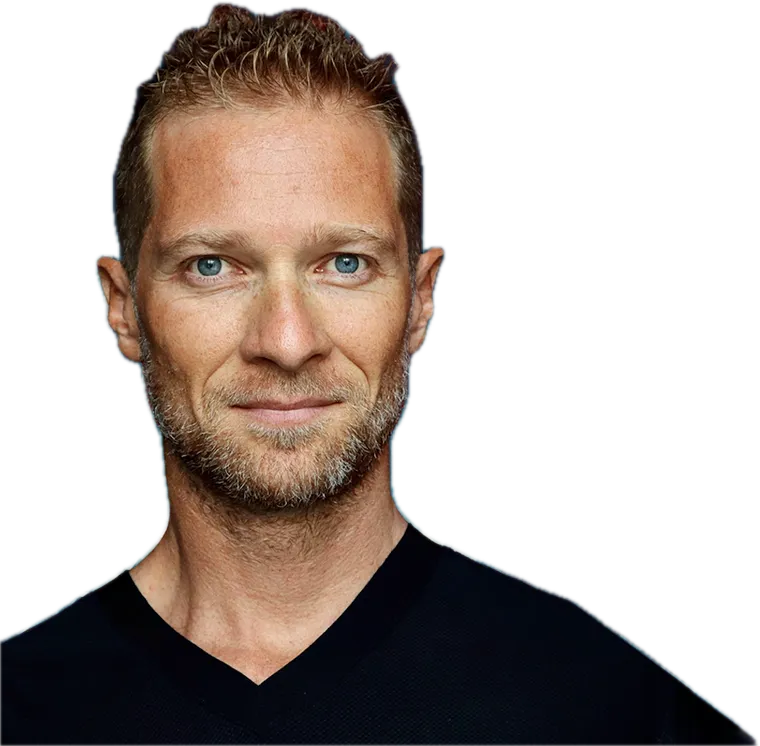
Who is Josh Galt
A missionary kid who grew up without running water or electricity in a one-room cabin in British Columbia, then spent intense periods in West Africa, Eastern Europe, and Nepal. During university, after football failed, he led worship in a church he helped start, until the questions nobody could answer carried him to Ayn Rand, Objectivism, and out of the church. Decades of running rivers and traveling across more than 70 countries followed, living among Buddhists and Catholics and Muslims, still hoping there was a God. Now he sits across from a monk, a rabbi, a Sufi, and people who walked out of their faith, and asks them all the same question: what happens when you live it fully, and what is the purpose of this human journey?
The missionary kid
British Columbia · Ghana · Romania · Hungary · Nepal
“I grew up as the child of very fundamentalist, Pentecostal, Evangelical Christian missionaries.”
His parents ran a school and mission station for Native Americans in British Columbia, where he spent most of his first decade in a one-room schoolhouse. Before he finished high school he had lived in West Africa, Eastern Europe, and Asia, in orphanages and among Roma communities.
He watched his father preach and his mother play the piano while a witch doctor held a ceremony against them. “I saw miracles happen.”
Leaving it all
Worship leader · Ayn Rand · 70+ countries · Plant medicine
“My mom let me question, and she was honest.”
He helped start a church and led worship for a couple of years at university. The questions without good answers (how can a good God create evil?) kept coming, and after college he went the other way. Reading Ayn Rand was “like a drink of fresh water to someone that’s just dying in a dry desert.”
He never became an atheist. He calls where he landed agnostic theist: “I hope that there’s a God. I hope that there is a benevolent creator, a deity.” Then decades as an extreme athlete running rivers all over the world and traveling to more than 70 countries, living in Buddhist and Muslim societies, and close to families of many faiths.
What brought him back to love, and reopened his connection with the divine, was years of seeking with plant medicine, and the conscious work of integrating the deep lessons and healing it brought.

The baptism party
Mexico
“Not one person has mentioned that we are here because the parents … just dedicated their child, their child’s eternal life to God.”
Married to a devout Catholic in Mexico, he went to the baptism of a baby. The Mass was “a pure, beautiful, loving religious ritual.” The party after it was hours of small talk, sugar, and Bad Bunny on the speakers. “Something’s wrong with this picture.”
Since then, when he is a padrino, he asks the kids before the party starts: why are we here, what did you do today, and what does it mean to you? The kids love it. The adults are the uncomfortable ones.
The rant, as he posted it. Best at 1.5x.
What he is asking
The premise
“People struggle to live with integrity, which means people struggle to live in accordance to what they say that they believe.”
Integrity, he says, is the opposite of hypocrisy. The show isn’t an attack on any belief system, and the title isn’t a sneer: “it comes from a place of love.” He holds himself to the same question: “We’re not good at our faith. We’re not good at our moral frameworks. Everybody rationalizes.”
It started as a question about integrity. It has become a wider examination: why people believe what they believe, whether a belief is worth living all the way, and what happens when someone does. Some guests live their tradition fully. Others lived one fully and left it, and can say both what it gave them and what it cost.
Ask why
Outside the show Josh founded Face Level Industries, Anabasis Intelligence, Beeghee, and Venturopoly. His writing, talks, and other work are at joshgalt.com.