

Lincoln Cannon
2Ø · Season 2 · Mormon Transhumanist
We Are the AI of God: A Mormon Transhumanist on Power and Change
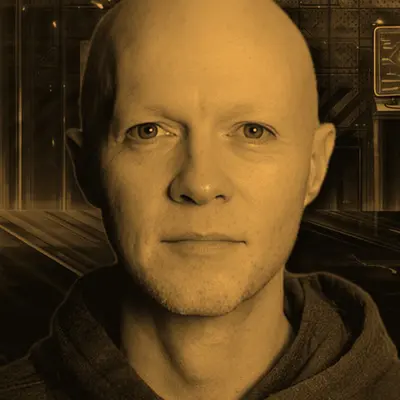
A practicing member of The Church of Jesus Christ of Latter-day Saints who served a mission in France. He co-founded the Mormon Transhumanist Association in 2006 and led it for ten years.
· 1 h 52 min
About the guest
Lincoln Cannon is a technologist and philosopher, and leading voice of Mormon Transhumanism. He writes and presents about technological evolution and postsecular religion.
- I WAS A CLOSET ATHEIST FOR 7 YEARS
- THE DEMONS BELIEVE TOO
- MORE DANGEROUS THAN NUCLEAR WEAPONS
Full transcript
Lincoln Cannon: Sure. Yeah, thanks, Josh. So, to understand Mormon transhumanism, as we were discussing before the audio challenge, was that I first think you need to understand Mormonism and transhumanism independently, and that helps understand the two in combination. And I’ll just offer some brief, simple, probably oversimplified, but still accurate definitions of the two. First of all, with Mormonism, I characterize Mormonism as an immersive discipleship of Jesus Christ. And what I mean by immersive is particularly important. Immersive, for me, means that… Mormonism is the attempt to live the religion of Jesus and not so much be a religion about Jesus.
Yeah, Jesus is super important. As Mormons, we look to Jesus as the principal example of the kind of person we ought to be like, but it goes farther than that. Mormonism emphasizes the idea, we call it exaltation, the more general category for the idea is theosis, becoming like God. And different Christians have different interpretations of this idea. Some Christians don’t like it at all, of course. For Mormonism, it takes a very, it tends to take a very literal form. In Mormonism, God is embodied, you know, God is very intelligent and has great capacities, and those capacities notably include great compassion and creativity.
So in Mormonism, we aspire to be like that ultimately in every way we can. So we ought to learn to become more, you know, grow in our capacities of intelligence and, you know, the kind of embodiment we have, but more importantly, grow in our capacities to love. So an immersive discipleship of Jesus Christ is how I would characterize Mormonism as a type of Christianity.
And then for transhumanism, I think a good, a solid definition of transhumanism is advocacy for the ethical, advocacy for the ethical enhancement of human capacity using technology or, so the basic idea being two components to this, it’s not just technological cheerleading, but we advocate for it. And number two, we want to do it in an ethical way. Some people think that transhumanists are merely technological cheerleaders. We’re not. We care as much about the risks as we do about the opportunities and how to mitigate those risks and pursue the opportunities.
So if you’re not taking into account both, you’re probably not a very good transhumanist. And if you’re not saying that these are desirable things to pursue, this concern for mitigating the risks and pursuing the opportunities, you’re probably not really a transhumanist. You might be engaged in something related, but an ism is usually something that gets advocated, right? And then it does have some things to do with technological optimism and particularly a transformative case of technological optimism.
It’s not just about, oh, yeah, technology around us is going to potentially do good things if we mitigate the risks, but it is going to change us, our bodies and our minds, our relationships and our world in deeply transformative ways, hopefully for the better if we do things right. So that’s how I share it.
Josh Galt: And that’s what I think scares people. Yeah, I think that’s what scares people is the idea of transforming us as humans. Because if we look at history…
Lincoln Cannon: Go ahead.
Josh Galt: Even for someone who believes in evolution, let’s say, it’s like, oh yes, we came from apes and they came from these single-celled amoebas millions of years before, or whatever it is that people believe, or if they believe in creationism, there still is this, we have changed over time, but it’s like, oh, it’s thousands of years, we can’t really… Connect with that on an individual level. But if we say right now we can use technology to change ourselves, suddenly people are like, no, no, no, no, no, no, I’m not changing, I’m not evolving, I’m perfect, I was created in God’s image.
So I guess my first question to those definitions would be, where do the ethics come from in transhumanism and is that why you’re connecting it with Mormon transhumanism or Christianity or Christian transhumanism?
Lincoln Cannon: Yeah, great question. And first of all, let me say that I sympathize with those fears. Those are not illegitimate fears. They are fears that reflect real and substantial risks associated with these ideas. So people are right to have some of them. Now, I do think it’d be a mistake to be driven in our decisions just by fear. I think that’s a very counterproductive way to approach anything, frankly. Yeah. But those fears reflect real challenges. So how do the ethics play into this? What drives the ethics? Well, that depends… Very much on the kind of transhumanist you’re talking to. Transhumanists are very diverse.
And yes, I am a religious transhumanist, a Christian transhumanist, a Mormon transhumanist, and that plays an important role in my ethical approach to transhumanism, but I don’t require the language of religion to talk about the ethics of transhumanism. I can do that independently. And frankly, I think that arises in part from how I even approach religion. I don’t think that we ought to look at ethics, even in religion, as something that stems merely from what God says. God says so, therefore it’s good. And that reflects Mormon theology in some important ways. In Mormon theology, God doesn’t create everything ex nihilo.
Instead, God emerges immediately. In Mormon theology, it’s very existentialist theology. Where God is, as the founding prophet Joseph Smith described, co-eternal with spirit and matter and emerges within them, the gods, and sometimes Joseph Smith refers to them plurally, see themselves in the spirit and matter, recognize that they’re more intelligent than others and go about instituting laws to help others progress like themselves. That’s almost a word-for-word quote from one of his sermons. So, because, because Mormonism is rather existentialist, we still have this issue of like, what is morality? Where is, what is ethics?
Where does it come from? We can’t just say, well, God said so. We have to ask, why does God say so in Mormonism? And thus we can ask a very similar question from a secular perspective, you know, what are ethics? My answer to that is somewhat complex deep down, you know, there’s a rabbit hole here, but we can answer in a relatively simple way, and it will sound hedonistic at first, and that would be an incorrect interpretation, but I think ethics are ultimately desire-based. We have to look at what people want. And why they want it and why it doesn’t just reduce to hedonism is that then we need to ask ourselves, okay, well, desires conflict.
How do we reconcile those? How do we create a world that’s good for you and for me? And then in that reconciliation, do our best to fulfill that potential together? I would call that love and joy. So when we begin with what people genuinely want and then work together to create a world that reflects that’s where ethics derives from. That work of reconciliation is where ethics arises. Now there are some big problems, some big challenges there.
Desires conflict, wills and goals conflict, laws conflict with individual interests all the time, and so reconciliation is genuinely a hard thing to do, but I think that also reflects something real about what we experience. The world we live in really is that hard. When we do try to engage in real ethics, we do encounter real problems all the time, and supposing that there’s somehow a simple answer to solving all of those problems, Has, for millennia, proven inadequate, and I think is just as inadequate today, but that doesn’t mean the work is pointless. We should still work at it.
We should still care about what each other wants and working together to make the world a better place for all of us, and that’s my answer for where the ethics ought to come from.
Josh Galt: So you mentioned love. For me, I can definitely derive morality from outside of religion. I think that it should be whatever supports and promotes life. So the protection of life is very, very important. And if we start from a foundation like that, then you could say that’s from a place of love, right? Because we’re loving the other living beings. But it… So that eradicates a lot of the division just right off the bat because if we’re going to protect life then okay so we’re not going to go and conquer other peoples and we’re not going to have war and killing and all of these things because the goal is To build life together.
And then we have to find those little minutiae, the details of, okay, you think this, you want this, I want this, how are we going to work together? Not so much to find compromise, but how are we going to think long term in the way that we can each be satisfied in having what we want on this earth in this life? I think what maybe people don’t understand about transhumanism is it seems like… And I’m just going to throw these things out there so that you can correct them. Because I know a lot of people that are really, really against transhumanism and I have sort of a conflicting view personally because I’ve…
As some of the things that I’ve written that I think you had read, because you mentioned in one of the emails, like, I think that the human design is terrible. Like, I’ve just had two babies in two years, and when they’re born, like, we are the most fragile, pathetic beings, and it’s like… Okay, God, if this was your plan, why? Because other animals fall out of the womb, like, or the birth canal, and they could walk in like an hour and they can survive, right? Babies, it’s like this long process. And there’s so many other things. And transhumanism brings in these ideas of, okay, here’s how we can improve that.
And so that gets into the science and technology aspect. Like, I think that there are some really valid ideas for improving our lives. I think what a lot of people get scared of is it’s just a bunch of rich guys from Silicon Valley that are trying to become gods so that they can have all the power and all the control and they want to live forever because they think that they’re better than everyone and that’s transhumanism and I don’t think that’s necessarily the case because I have read a lot of different perspectives.
It’s interesting to me, I’ll just say one more thing, that There’s so many different opinions within transhumanism, just like within any religion, right? Within Catholicism, Christianity, there’s so many denominations, it’s like, can we just have one definition for each of these things? And then if you believe, if you’re a Muslim, cool, but there’s like 10 flavors of Muslim, you know? So… That’s sort of the idea, though, that I think people have about transhumanists, is that it’s a bunch of rich old guys from Silicon Valley that are just trying to become gods and do away with the rest of us.
So what is it really, in the general, what is it trying to accomplish? Is it only trying to live forever? Or is it trying to truly figure out how to evolve our species as humans? Is what Elon Musk is doing with Neuralink, Is that the mark of the beast? Or is he genuinely attempting to find ways that he can help people who are paralyzed? Such as
Lincoln Cannon: It’s both, and as I was saying earlier, the fears that people have… Come from real places, places where we should be genuinely concerned. There are expressions of transhumanism that are incredibly elitist. There are expressions of transhumanism that are incredibly egocentric, that are narrow in their aims of fulfillment. And broad in their aims of oppression and putting others into servitude or even, you know, passively allowing for their extinction and not caring very much. I don’t think that’s the majority of transhumanists, but it is certainly a real form of transhumanism.
And so, you know, when we go back to the definition of transhumanism that I offered, I actually think that it’s not at all a controversial definition among transhumanists generally. The challenge is, how do you define some of those words I put into transhumanism? So I said again, it’s advocacy for the ethical use of technology to enhance human abilities. Well, what is the ethical use of technology?
And there are Elitist strains of transhumanism, which define ethics in very narrow ways, and that we should, I would argue, all of us, even those who are espousing it, should be strongly opposed to those expressions, those characterizations of ethics.
Josh Galt: Centralized decision-making on what is the common good? Would that be one?
Lincoln Cannon: Yes, very strongly we ought to be opposed to that. And let me say this, not only should we be strongly opposed to a centralized definition of what good is, we should be strongly opposed to all centralizations of power, because they’re incredibly dangerous. They at best offer a future of servitude for the rest of us, and of course, The real risk is far worse than servitude. It’s somewhere between annihilation and slavery.
So when people see transhumanists advocating futures that aren’t sufficiently grounding themselves in a concern for genuinely decentralizing power, for genuinely maintaining agency and lifting others around us in their own way, not in my way, in genuinely their own way, we should be afraid of that, we should be opposed to that, and those forms of transhumanism should receive strong condemnation. But that’s not all that transhumanism is.
And if people pretend that’s what transhumanism is, they’re really engaged in a straw man or a narrow account of transhumanism and making it just a boogeyman instead of looking how powerful it can be also for the pursuit of good results. Like Christianity… We have this vision in Christianity. Paul, the apostle in the New Testament, articulates it perhaps best, where he says that he’s going to share with us this mystery. And that mystery that he’s going to share with us is that Christ is in us. And then he says there’s another mystery. And what that means, in part, Christ is in us, is that we’re not all going to sleep.
And he, by sleep, in this case, he means we’re not all going to die, but we will be changed, he says, in the twinkling of an eye from mortality to immortality and death will be conquered and we will become joint heirs in the glory of God. I mean, that should be a mind-blowing idea from a Christian perspective, to be joint heirs in the glory of God, if so be, he says, That we’re willing to suffer with Christ. Again, that idea of Christ in us, participating in what Jesus exemplifies. So this kind of Godhood that Christianity talks about, this divinization or exaltation or theosis that Christianity talks about, is not us being above others.
It’s us suffering together. It’s us suffering. It’s dignifying genuine disagreements between us sometimes and seeking to create a world that can lift us all up despite those genuine disagreements. That, in my mind, is what reconciliation or atonement is in Christianity and what Jesus so profoundly illustrates in the Bible is this person who says, no, it’s easy to love your friends.
Josh Galt: Mm-Love your
Lincoln Cannon: You need to love also your enemies. And how many of us do that?
Josh Galt: Enemy. That’s really interesting because I would say from my experience and background with Christianity, most people would interpret Paul’s statement very differently about the rapture as opposed to us conquering death in the transhumanist sense that you’re, I think, alluding to.
So that then sort of gives them a free pass to not so much love their enemies and to not try and do all of those things here on earth because the goal is in heaven and that’s what Paul was talking about in their interpretation of that and so therefore that’s the focus, that’s where all the good stuff’s going to happen, it’s not about here and so that’s part of the resistance I think to the idea of technological or scientific advancement of the human on earth.
Lincoln Cannon: Oh, yeah. That’s a sadly common approach to interpreting the New Testament. It overlooks some important things, such as, for example, the writings in the Epistle of James, where James says, hey, listen, you’ve got faith. Well, no, let me rephrase that. He says, you believe in God. Good for you. The demons in hell believe, too. And what do they do about it? Well, they tremble. And then he goes into this discourse about the importance of faith being expressed in action.
Josh Galt: Mm-.
Lincoln Cannon: Faith without action, faith without work. He says, is dead. It’s not really even faith. And in this case, when we’re directing faith towards these visions of human potential in the future, I would say that he’s strangely literal in what he means by faith without works is dead. In other words, we have these visions of the future, such as, you know, what people might call the rapture or what Paul the Apostle is describing with this transformation, this transfiguration of humanity. They look at it very passively. They look at it, oh, this is something God’s going to do to us. And certainly grace is involved. I do not wish to discount that at all.
But equally important to the grace in how Christianity is expressed in the Bible is It’s this concept of participation, that when we receive this grace, we ought to then go share it with others as well and give it to others. And when we are doing that, we are working. We are expressing that same grace. And so in this particular case, Jesus goes about doing works where he consoles the sad, he heals the sick, he raises the dead, and then he goes to his disciples. And what does he tell them to do? He explicitly tells them to go console the sad and heal the sick. And yes, he tells his disciples to raise the dead. Does that apply to us?
Are we taking that seriously enough as Christians? My answer to that is no, generally Christians aren’t taking that seriously enough despite Jesus’ invitation. And it’s perfectly consistent with the message throughout the Bible, right, throughout the New Testament, that faith without action, faith without works is dead. Like, let’s take him seriously. Let’s not have dead faith. Let’s act on this and do what we can to the extent we can about it. Now, today, I can’t tell you exactly how to raise the dead, but I have some ideas about how we might approach it in the future.
Josh Galt: So is that what the Mormon Transhumanist organization, the Christian Transhumanist groups are seeking to do, is to infuse the Transhumanist movement with those ethics that come from Christ, that come from Biblical principles, in order to ensure that it is something that is truly helping humans here on Earth? Sort of building that, the foundation of what science and technology are looking to do from that perspective. And if that’s the case, why is it not, why don’t we hear about it?
Because I think what everyone hears about in the news, and maybe this is just the media having a bias for certain reasons, but we hear about what Elon is doing and then you have, you know, this group is really scared because he’s going to bring about total success, And then you hear about technological slavery, and then you hear about what’s happening with AI, which I’m not sure how heavily AI plays into the transhumanist movement at this stage or not. I know that it’s obviously impacting everything we’re doing technologically speaking. But is that where you guys are sort of coming from and want to move things?
And if so, What do you see as the biggest challenges to getting that message out there? Because I don’t think in the mainstream that message is being heard.
Lincoln Cannon: Yeah, you’re right. And yes, that is our concern. And that is why Mormon Transhumanism and Christian Transhumanism exist, is that, you know, so Mormon Transhumanism as a formally organized movement is more than 20 years old at this point. And when we founded the Mormon Transhumanist Association, our aim was to express transhumanism with Mormon aesthetics and Mormon concerns and Mormon ethics to infuse it with that approach to the world. And for two reasons. Number one, we think we thought and continue to think. That transhumanism in itself is aesthetically weak and or another way to put that would be spiritually weak.
It has some powerful practical ideas that are too easily expressed in either mundane or profane or Some such ways that strike people poorly and that as a consequence lend themselves to the kind of demonization and ridicule that, you know, we so often see directed at transhumanism. So from a Mormon perspective, we wanted to infuse transhumanism with this religious aesthetic and then when, you know, when We founded the Christian Transhumanist Association, about a decade later, the goals were similar, but from a more ecumenical Christian approach, rather than just the Mormon approach. And
Josh Galt: Is that because of people’s views of Mormonism? Because perhaps that is more narrow as a religious framework as well compared to the Catholic transhumanist or the Christian transhumanist or even the Muslim transhumanist network?
Lincoln Cannon: Yeah, there are, of course, far fewer Mormons in the world than there are other kinds of Christians, and yes, that matters a great deal from a pragmatic perspective, like how do you influence people to see this other side of transhumanism in a beautiful way, in an empowering way, because it can be both, and so yes, our concern, and when I say our, early on, because the Mormon Transhumanist Association was one of, It was one of the first religious transhumanist organizations and very quickly became the largest. We had a lot of non-Mormons joining it, which we welcomed. It’s great.
But we, at a certain point, some of those non-Mormon Religious Transhumanists and some Mormon Transhumanists kind of got together and said, hey, it would probably be beneficial to have a Christian Transhumanist organization explicitly because that may relieve some cognitive dissonance for people who don’t wish to identify as Mormon. So some Mormons, including myself, participated in founding that. But here’s another thing that maybe people aren’t fully aware. Thinking about. And this drove our original concern with forming the Mormon Transhumanist Association and subsequently a concern with forming the Christian Transhumanist Association.
And that is that there are there is among Mormons. A common passive approach to Mormonism. And of course, among Christians, that same sort of thing expresses itself. It’s this idea that, okay, we have scriptures and we have churches and we have God and God is going to fulfill these prophecies inevitably is a common perception. And we really just have to kind of like watch as that unfolds. And I, almost all other Mormon and Christian Transhumanists think that is a… An ethically and pragmatically bankrupt approach to any religion, and particularly to Mormonism and Christianity.
If you’re just passively waiting for God to do something, you’re not actually living your religion, you’re not actually living Mormonism or Christianity, which invite us to participate in this work. And so we asked ourselves, well, how can we participate actively in? In doing what we can within the context of grace that we receive in very real and pervasive, persistent ways, what can we do in that context to participate, really, tangibly, practically? And that question led us to transhumanism. It wasn’t the other way around. We weren’t transhumanists bringing transhumanism to our religion, right? It was the other way around.
We were people trying to live our religions practically, and we realized, hey, there’s this approach called transhumanism that has resonance in certain ways with our practical concerns and has a vision that is potentially as big as the visions that we are talking about in Mormonism and Christianity, but they don’t always do it in quite the way we might want to do it.
And so, can we take some of this practical strength that they are articulating, syncretize that with the aesthetic and spiritual strength that we recognize and feel in our Mormonism, in our Christianity, and persuade people to be more active in their faith, and thereby become more empowered in their faith? And our answer to that was Mormon Transhumanism and Christian Transhumanism. So, this synchronization has benefits in both directions. It’s not just, you know, our religiosity taking something to those poor, benighted transhumanists. It’s also very much the other way around.
Transhumanists have offered a genuinely powerful, practical approach to the future of humanity. Very really so. And, like, we ought to learn something from that while also communicating. Taking what’s strong about our religious traditions to them.
Josh Galt: And so what are some of those practical applications of transhumanism that you’re bringing and learning from the transhumanists and applying with your Christianity, with the Mormon framework?
Lincoln Cannon: Yeah, it starts from some very simple things up to some complex and heady speculative things, right? The simple things are like, it’s very common among transhumanists to care a great deal about the health of the body and pro-longevity science and technology. Transhumanists, you know, the more practical among them are saying, hey, if you want to live long enough to take advantage of these cool things, I think there’s a lot of emerging technology ideas that we talk about and speculate about. Well, why don’t you take care of your health in the traditional ways now? Why don’t you exercise? Why don’t you sleep well?
Why don’t you take some supplements that have some good evidence behind them? Why don’t you see a doctor on a regular basis and get checkups and screenings? Like there’s a bunch of very practical everyday things that transhumanists are good advocates for. That we can bring into our religion with more power and say, listen, we have these visions of God making a better world, but have you ever thought that maybe you can help God better if you take good care of your own body,
Josh Galt: Of your temple, right? Like, that’s foundational in Christianity, is it’s a temple? Like, I know a lot of people, this is directly on what you’re saying. You know Bryan Johnson, obviously, the don’t die guy. I know a lot of people that just despise him, and I’m like,
Lincoln Cannon: Of your temple?
Josh Galt: I don’t get it. I don’t get the hate for this guy. He’s spending millions of dollars of his own money. Yes, his… Philosophy maybe is different than yours because he’s saying he wants to live forever or that he can live for 300 years or that we can figure that out. But… Like, set that little tiny, like, difference from what you believe that God has said to you as a Christian or a Catholic or whatever aside and look at what he’s doing and then maybe take some of what he’s learning and start to apply it to yourself.
Like, I’ve always, I’ve always experimented on my own body, I’ve always been an athlete and so I’ve always taken supplements and worked out and stayed as healthy as I can and I can hold both of the nuance of, I’m already an eternal being. I believe that I am a spiritual being having this earth experience. And wow, it would be fascinating if I could live for 300, 400 years. I am all in. So if Bryan spends all this money and figures out a way that I can still, instead of living to 80, I can live to 180, sign me up. That sounds awesome.
But I think what people maybe mistake is they think that, oh, he’s trying to like find a way to turn himself into a robot and then he’s no longer going to be human. And I don’t see it that way at all.
Lincoln Cannon: Yeah, I agree with you. First of all, compliments to you. You look great. I think you appear as if what you just said about taking care of your health is accurate.
Josh Galt: Thanks. The one thing that Bryan always talks about is the face. There’s nothing for the face yet. So my age shows in my face, but the rest of me, I keep in pretty good shape.
Lincoln Cannon: Well, yeah, you appear that way. Regarding Bryan, this may interest you. So, Bryan and I are friends. He used to be my next door neighbor. We went to the same Mormon ward together for years. Bryan, oh, well,
Josh Galt: I didn’t know. Is he a Mormon or are you allowed to speculate on that? I didn’t know that.
Lincoln Cannon: I know the answer to that. He was Mormon. He no longer identifies as Mormon. He hasn’t practiced for, oh, at least a decade. It’s been quite a while now. But so… So, Bryan and I, we have history, and in fact, I used to work for him for a period of time as a consultant, early on after he sold his first business and started trying to figure out what he wanted to do for investment purposes. So, what I want to say about your take on Bryan is that it is accurate. Bryan is a good person who is trying to help people. He doesn’t want to be a robot.
He does have genuine, sincere concerns about how to incorporate emerging and present technologies into his wellness routines. He’s extremely dedicated to it. And he Does a lot of good things to help people. He shares a lot of good information. And he wouldn’t openly say this, and I’m not sure to what extent he presently still acknowledges it himself, but some of the reason, a substantial part, I think, of the reason he’s doing what he does is because of his Mormon background.
In Mormonism, there is a strong conception that our bodies are temples, that the future of humanity is a transfiguration of our mortal bodies into immortal bodies on earth, still embodied, God still has a body in Mormon theology. More robust than the bodies we presently have, but that ultimately you don’t have to die to go to heaven, and in fact the dead have to be resurrected into embodied form to participate in heaven, and heaven is earth glorified.
So Mormonism has a very philosophically materialist conception of heaven, a very practical, a practically A practical possibility space for interpreting that in consistent ways with emerging technology and contemporary science. Now, do all Mormons take advantage of that practical possibility space in their individual interpretations? No, they don’t, of course, but many do. And Bryan is an example of that. Now, he isn’t Mormon any longer, but I think the reason he gravitated toward doing what he’s doing now is because those principles are sticky. They’re deep. They go deep into your psyche as a Mormon when you’re raised that way.
And they affect you basically forever. I know that also from personal experience because… As a young adult, I lost my ability to believe in Mormonism. I was raised Mormon. I lost my ability to believe, and I was essentially a closet atheist for about seven years or so.
Josh Galt: I kind of mirror that journey. Yeah. Yeah.
Lincoln Cannon: It’d be interesting to hear what those similarities are, just a quick thing to tie that back in, is that As I was trying to figure out what to do with my life and make sense of my loss of ability to believe, I think I was still implicitly practicing what I would call faith even though I wouldn’t have used that label because I was acting on my interest in creating purpose out of this loss of belief and ultimately that led me to ideas including transhumanism which in turn resonated with these very old ideas I got from my parents in my childhood and from Mormonism.
And because that resonance was there, sparked a new way of looking at life and purpose and relationships and brought me back to Mormonism, frankly, with a much greater faith and belief than I had ever had before. And transhumanism played a big role in that. I’m interested to hear how that is similar to what you experienced.
Josh Galt: So I grew up a very, very Pentecostal evangelical Christian family. My parents were missionaries. And so I spent time traveling all over the world. The first decade was like no electricity, no running water. They had a school and a mission station up in the north of British Columbia. So it was kind of that. And then we moved back to the U.S. because my dad was very, very American, wanted us, my brother and I, to play sports and, you know, had the whole American experience. So then we lived outside of Portland. But it was very, like I was deep in the church until college and it was during my time with a church plant while I was in university.
And I was on the worship team and I was leading worship and I just started to really question a lot of things because when you’re in the religion, you see a lot of hypocrisy behind closed doors and that’s just human, like I’m not judging my parents or anybody that I knew, it’s just human nature, like you’re going to fail, but there was resistance to question or to admit failure and to look in the mirror and question any beliefs at all. And it was during my time as a worship leader that I started realizing, like, man, like, people are talking about the flow of the Spirit, but we planned that, right? And I’ve talked about this before.
It’s like, we kind of manipulated your emotions just like a good rock star would do. Like, that’s literally what we’re doing. And so then I started really just… Looking at a lot of different… I’m a voracious reader. I’ve always loved to read. I hated school, but I loved to read. And so I was reading everything I could get my hands on from Buddhist writings to… then I got into Ayn Rand and that was sort of the end of it. From there, I was never an atheist, but I got to an agnostic theist… Type of place where it was like, I don’t see a God, but I hope that there’s a benevolent deity creator or something.
But in the meantime, I’m going to do everything I can to live my life with purpose and be productive and, you know, seek to make something of myself. And then over the years, I started experimenting with plant medicine and that sort of brought me back to love in a sense of love.
Yeah, some of my experiences were just, it’s hard to explain unless someone has done plant medicine, ayahuasca or mushrooms or peyote or iboga or any of those things, you can kind of relate to like, Yeah, it’s just you go to another realm and you realize like all of these little things that we fight over and we kill each other over here on this earth are so petty and silly. Like we can be so much more. We’re created to be so much more and we’re connected to God and that divine energy that wants us to become so much more. And so that I think…
Perhaps because of the journey, the ups and downs, the losing faith and then regaining it through a different mechanism, I’m open to the ideas of, a lot of the ideas of transhumanism in this sense of, if it’s my choice, Let me make that choice. If someone comes and tries to tell me that I have to put a chip in my hand so that I can buy or sell, or that I have to use CBDCs so that you can control where I go, what I buy, that’s my line in the sand.
But if you tell me that I can live for 300 years, and that maybe like through this process of technological evolution, we’re going to realize like God never stopped evolving and that we can be part of the process of So, improving this human vessel or, you know, vehicle, that sounds great. I don’t see where that would be an insult to a divine creator in any way at all.
Lincoln Cannon: Yeah, I’m on the same page with you there. Coercion… Really is kind of the central, unethical or anti-ethical behavior. Coercion, oppression, when we start trying to impose unilaterally our values on other people for whatever reason, because we’re transhumanists or because we’re Christians, we’ve messed up. And On the flip side, when we start asking real questions of each other and really caring about what the other thinks and wants, how they want to live, and if we can make room for that, even when we disagree, like, you know, to the extent they’re not trying to kill me and oppress me and enslave me, why can’t I make room for them?
And frankly, there’s actually a really beautiful…
Josh Galt: Mm-Makes
Lincoln Cannon: Part of Mormon theology in relation to this that I like to share with people, and that is in Mormon theology, there’s not just one heaven. There are essentially worlds or heavens without end. That are congruent with the desires and the works of their inhabitants. So if you don’t, and Mormon scripture or the Book of Mormon even goes so far as to say, hey, listen, if you go to a particular heaven, what Mormons might call a celestial heaven, or the celestial glory, and your desires are not congruent with it would be like hell for you to be there. You wouldn’t want to be there.
And so there’s a great deal of grace, mercy, and compassion in this idea that heaven needs to be congruent with who you are, or it’s not heaven at all. Another place in Mormon scripture says, hey, what’s the value of a gift if I give it to you and you never wanted it in the first place? It’s not really a gift.
Josh Galt: Sense.
Lincoln Cannon: And so I think ethics needs to go back to that as you’re very similar to how you’ve articulated that resonates with me.
Josh Galt: So, it seems like then transhumanism, like most things that are sort of come out of human innovation, right? Is something that can have really positive impact on humans, and yet it’s getting weaponized by those who want to take it all for themselves and use it for power and control.
Lincoln Cannon: Absolutely. That’s exactly right. It’s an ideology that encourages us. To approach power, raw power, technology. Technology is the formalization of power. Like, it encourages us to approach power ethically, and then we define ethics in all kinds of ways as transhumanists. And in my mind, we should be bringing the very best of our aesthetics, our spirituality to this question as Mormons and as Christians and, frankly, as any other religious spiritual approach to life. We should be bringing that with us to this question of what is ethics? What is power? Like, what is the best approach to using power? And this has become a…
A momentous issue because of artificial intelligence. The power of intelligence has reached a point where it’s accumulating power, Growing so rapidly, and in many cases centralizing into a few elitist hands so rapidly that it presents unprecedented danger. This technology, in my estimation, and frankly, it like underserves the challenge, say in my estimation, I’m just going to say it is the most dangerous technology that has ever been developed, far more dangerous in its potential than nuclear weapons.
And it is more pressingly dangerous than any other possible natural dangers, whether that be environmental change, asteroids that might hit Earth, super volcanoes, I don’t care what you might imagine could destroy human civilization, and those are all real risks, I acknowledge that, but none of them are anywhere as pressing. As the danger of artificial intelligence. Now, having said that, I’m very pro artificial intelligence. I’m an optimist in our capacity to use it wisely and even to integrate it into our lives in ways that preserves our agency. But it must be done volitionally.
It must be done in a way that Spreads that power out to people in general. And we’re not really doing a good job of ensuring that right now. We’re putting it in the hands of a few big corporations, a few powerful countries. And if we continue along that route, unabated, we are going to develop What I would call a singleton or a few would-be singletons of highly concentrated power that can treat the rest of us as expendable. And that outcome would be horrific. It would be what Christianity envisions as hell.
Josh Galt: Yeah, or just the end of our existence in some ways, like the dystopian picture that is painted by the pessimistic view of what’s going to happen with AI over the next few years, it’s really, really heavy. Whereas the optimistic side, and it’s interesting… Because I’ve been using it just for a few years since the first GPT came out in 2022, but now I use it extensively every day and like I see the incredible power of these tools and most people are just oblivious even to the positive of what it can do for their business or for their lives.
And yet people are also very oblivious to the downside of giving five guys and two governments, essentially, this power that… People continue to compare it to, you know, well, we’ve had the printing press, that was disruptive, we’ve had disruptive, it’s like, no, none of these things, not the natural disasters you mentioned, not the nuclear bombs, none of these things are self-improving and smarter than us already, and like, the potential for this is, It’s going to be an exciting couple of years, and it’s going to be the next two or three years where this is all going to just, because it’s already going to hockey stick.
I’m curious to your perspective of how we can… Rein in what’s happening or how we can utilize it or even just spread awareness.
It’s like what’s happening right now, this week with Jensen Huang, if I’m probably not pronouncing his name right, but the NVIDIA CEO, it seems like he’s being targeted for something that like, Not to justify the behavior, but every wealthy, powerful, successful man has a side chick probably, but he’s being targeted in a way that is, I think, meant to shut down open source AI, to shut down the potential to continue having Decentralized AI and put it all in the hands of a few people too, because it’s so powerful, we have to control it, we have to protect, and that I think is really dangerous, but what can
Lincoln Cannon: Yeah, Josh, I sincerely think this is the most important thing you and I could talk about in this whole thing. I love Mormonism, I love transhumanism, and both are related to this topic, but presently,
Josh Galt: We do, for sure,
Lincoln Cannon: The most important thing that any of us can be doing is advocating and acting on the idea of decentralizing this power. At every level. That starts by saying to our family and friends, influencing them, just like what we’re
Josh Galt: But how?
Lincoln Cannon: Doing right now, saying, first of all, that it’s important. That’s number one. Say this is important. This is imperative. And explaining why, because if this power concentrates, it turns the rest of us into servants or slaves or annihilates us. Number two, okay, so what do we do beyond talking about it? That’s what I’m saying. Politically, we need to get representatives who are in favor of decentralizing that power and in preserving what decentralization of power we already have.
So, for example, in the United States, some of the greatest political achievements of the United States of America are The separation of powers, both between the legislative, executive, and judicial branches, and the federalist system, which separates power between states and the national government. These are huge political innovations with far-reaching practical ramifications that are being assaulted all the time by centralized elites. And we cannot let those die. We need local power. We need state power. We need federal power. All of these powers should be in contestation with each other all the time.
And I’ll get into a philosophical explanation of why if you’re interested, but let’s just say it’s super important. So let’s vote people into power locally and federally that want to preserve and strengthen. That political, that governance, separation of power. And now here’s another thing. How do we do this to In, directly in relation to AI, well, first of all, stop fighting against data centers in your own geographies. Yes, they need to be clean. They really, to the best of our ability, need to be clean. I get it. That’s important. But you know what’s more important?
Not giving all the power to China, not giving all the power to one centralized corporation in the United States that puts it all in their own backyard under their own security guards. You need to be able to destroy the data center next to you when it goes wrong. You need to have that power next to you and it needs to be decentralized on every level. We need the processing to be decentralized. We need the memory to be decentralized. We need the energy production to be decentralized. We need the rare earth materials to be decentralized, their mining and their transportation at every single level.
We need to decentralize this technology, its ownership and its production and its application, or we’re dead or worse. So, like, don’t oppose the things that are going to save you and your children and your community from these very terrible outcomes. They’re worse than the environmental problems over a shorter period of time. And if we get it right, it will make us all smarter and more intelligent.
More agentful, more powerful to solving the problems of environmentalism and whatever other concerns we have, because these are all downstream of our ability to be empowered agents and live in a real moral world where power is concentrated into a hand or two, real morality disappears. It becomes just the powerful say what happens. Real morality only exists where we share power.
Josh Galt: So philosophically though, how do you view people and their ability to take responsibility and For their own lives. I think that is possibly at the foundation of the problem with people wanting to be told what to think and what to do. And part of that problem stems from a century or more of a system that has From birth, from childhood, from the time you enter school, that sort of idea of sit up straight, stand in line, shut up, only talk when you’re called upon, and you shouldn’t question authority. I think that is…
My pessimistic view of the potential to right the ship and to decentralize things, I mean, just look at the response to crypto over the last 15 years, and there’s the government response, but they’re able to demonize the whole sector, even though, obviously, decentralization and Bitcoin have amazing benefits, and But they can pick out some bad actors because people act short-sighted and selfishly in a way, not that you should be selfless, but in the bad definition of selfish, which is you’re just doing things for you without thinking about the long-term consequences for everyone else or yourself, and that causes problems.
And we’ve just seen over and over people’s inability to take responsibility to do the ethical thing. So how do we fix that? Like at a local level, I totally agree. Like if we can get involved with our, you know, our school boards even, or the local city council, just start there instead of worrying about who’s president. And yet, Very, very, very few people do that because it’s just easier to be comfortable and enjoy the spoils of modern civilization, but that could go
Lincoln Cannon: Yeah, it
Josh Galt: Away really quickly.
Lincoln Cannon: Could. You and I didn’t anticipate how symmetrically we would be viewing these things. It’s a pleasure to be talking to you about. But yeah, this is a dire issue, an issue that we need to work on right now. We can’t wait. And It’s very hard to change the way people have been doing this, because there is so much inclination, because life’s busy and hard and scary, so it’s not because people are bad people, but life’s busy and hard and scary, and so they often go into the easy route, we often go into the easy route, you and I too, right, and so what do we do?
Well, we talk about it like you and I are doing right now, but I think what we need to do for many people, for most of humanity, is show them how their fundamental value propositions about life, which tend to be their religious systems, Require of them some action and some thoughtful agency and some work instead of being so passive. You know, the Mormon Transhumanist Association, Christian Transhumanist Association, we’ve been working on this for decades at this point, trying to show people how their commitment to Mormonism, their commitment to Christianity should translate into Christianity.
Acting on these ideas, doing something about these ideas, preserving the people, you know, the empowered kinds of persons that we are, not relinquishing that to a whole bunch of authoritarianism controlling us. I wish there were a simple answer to how to solve the problem. There’s not. But there are real things we can do. And those real things are, you know, it may be boringly in some sense. The kinds of things that we already know we can do, right? We need to talk about it. We need to persuade people about it. We need to help them see how what they value is already consistent with what we’re saying we ought to be doing.
And then maybe that will motivate them to act. Maybe we need to help them see how the beautiful futures that we Our religions and transhumanism and various other secular views, those beautiful visions of the future are dependent on us not allowing ourselves to succumb to the fear that would hand over all of our agency to these centralized authorities. I wish there were one right, easy, simple answer. There’s not. You know that. I know that. But we can still keep trying. We can
Josh Galt: Sure. But if… If one of the biggest challenges, because we started, the action points that you were talking about were, first of all, physical, your physical body, like take care of your body and do these things for your health. That’s one of the things that the transhumanist idea is saying, look, we can really fix this. You can live much longer, much healthier. Right. But if you look around the obesity rates and diabetes and the things that people put into their bodies, it’s crazy.
So if they won’t start there, will people really go to a much more challenging place of, I am going to reject this system and structure that is trying to tell me what to do, trying to enslave me, trying to use technology to do all these things? I mean, some of the smartest, most successful people that I know, they’re very much in love with life and they’re making the decisions that they have to do for their family, but most of the people that I know that are in that boat have kind of just given up on the system. They’re like not seeing the optimistic side. And I’m… I think hopelessly optimistic, I think it’s just my innate wiring.
Like my brother and I started prepping in the 2000s. We became preppers, you know, back when it was the gold bug thing and all that. And I got really sick of it because after a couple of years, I’m like, maybe the sky’s going to fall, but it’s coming really slowly. And I don’t want to live like this for my whole life. This is so pessimistic. Yes, prepare for the worst, but I want to hope for the best. I want to build the best. And even people that I really love and respect that are super smart, smarter than me, and they see the whole macro geopolitical picture of what’s going on. It seems really, really bleak.
So what are some things, let’s talk more optimistically on action steps. What are some things that, besides taking care of your health, that your group says, look, here are some things that you can do locally, here are some things you can do with your family, here are some things, some ways that you can use technology locally. And maybe it’s, here’s how you can boost your connection to God using technology. Here’s how you can study more and understand better. I don’t know, but tell me some more about what those things are so we can go down those, pull on those threads. Because I want to give solutions. I do think it’s really bleak.
I mean, I watched the AI documentary on a flight recently, the one that came out a few months ago. And I was blown away just to see the interviews and I don’t know if you’ve seen that documentary, but it shows both sides, but man, the downside is it’s really dark. So how can we avoid that if we can?
Lincoln Cannon: Avoid it. I hope that my acknowledgement of the risks doesn’t get interpreted by anyone as a feeling of being resigned to them or a fatalism toward them or even an expectation that they’re the most likely. I only want to communicate that they are real, real risks and we should take them seriously. I actually am very optimistic that we are going to navigate them well and get to the other side, so to speak. There’s always risks. In Mormon theology, we have a passage of scripture that depicts God weeping in heaven over various challenges that God continues to face. So I don’t think risk is something that ever goes away.
But we are at a period of time in human civilization with an unusual amount of serious things to confront for our future. A big change. Maybe a coming-of-age crisis, we might think of it as. Like, human civilization, we’ve hit puberty and let’s see if we can hit adulthood without killing ourselves type thing, right?.. So, you know, why am I optimistic? Well, and what can we do to be optimistic? You mentioned the health thing. I think if we’re slaves to our bodies, it makes it harder to be agentful about everything else. So don’t be a slave to your body. Like, get that under control. Exercise, sleep, eat well.
You know, we talked about that already. Important. On the personal kind of interior side, what can we do? You know, we talk about the body, what can we do about the mind? Well, for the mind, already the body is going to help the mind a lot. But let’s cultivate a sense of purpose and a sense of relationship. Let’s look at the vision of what humanity can become and talk about it in real ways like, Can we become that? Can we become people who really do console the worst sadnesses, the worst grievances, the worst miseries of humanity? Can we do that? Yes, we can. So let’s talk about how.
Let’s talk about That approach to happiness and potential and joy in a holistic sense, not in a superficial sense where nothing is ever hard. Of course there will be hard things. But let’s let’s figure out how to console each other and be together with each other and support each other and care about each other and not treat each other as aliens all the time. Let’s
Josh Galt: So can, can you go more, more on that? Because is that coming more from your Mormon side or from, is that both the transhumanism and the Mormon side? Because that’s one perhaps mistaken view that I have had on transhumanism is that it lacks empathy. And what you’re saying is that one of the things that we should do is have more empathy.
Lincoln Cannon: Oh, we should have more empathy, we should have more compassion, we should care much more about our relationships. And does that come from transhumanism? There are strains of transhumanism that do emphasize that. It comes more from my Mormonism and my Christianity than from my transhumanism. Transhumanism leaves a possibility space where there’s also some very egocentric expressions of transhumanism, which… Which I criticize strongly and I don’t identify with.
But that’s not to say there aren’t secular transhumanists who care a lot about that and emphasize it and promote it in important ways that resonate strongly with my own position and with whom I share a lot of values and advocacy for action. But yes, this idea that we should love each other and forgive each other and serve each other, I mean, come on, if you’ve studied Christianity at all, you know that sounds like Jesus, right? That shouldn’t sound new to you. If it sounds new to you have not. Been going to church or you have not read the Bible. It’s just so obvious. It’s like not the controversial aspects of Christianity.
Come on, love, serve, forgive. Can we do these things a little bit better? Absolutely. Every one of us can. I don’t care how hard of a situation you’re in. You can do better at loving, serving, and forgiving. Somehow. You really can. And my experience and observation is that the effort to do those simple things a little bit better always pays off somehow for you. It always does. At first, you might think, oh, it’s not going to be enough. It’s going to be too hard. I won’t care. I’m in a bad situation. People hate whatever. I don’t care what your situation is.
Just try to be incrementally kinder, more loving, more forgiving of the people that have done wrong to you. You don’t have to be perfectly forgiving, you don’t have to be perfectly, just a little more. Try to serve a little bit more. You will be better off for it. Your relationships will be better off for it. It will pay off. I’ve observed that invariably. Yeah. Try it. Like, if you haven’t tried, I’m not talking to you, Josh, I’m sure you’re trying. But there are people that have gotten kind of hopeless about that, right? So, like, please try again.
Josh Galt: That’s really
Lincoln Cannon: It does make a difference. And it isn’t, you don’t have to be a philosopher or a technologist to try those things and to get payoff from them. What? Here
Josh Galt: Interesting because that seems so just the opposite of what I think most people would think that a transhumanist would say. And yet it’s very powerful
Lincoln Cannon: I am. I love
Josh Galt: In a human sense of how can we be better humans now? So, we take care of ourselves, you know, it’s like on the plane, the oxygen mask fall, you got to put your own mask on before helping others. Okay, take care of yourself, body, mind, spirit, and then take care of those around
Lincoln Cannon: It. That’s
Josh Galt: You, like in your inner circle, your family, the people that you interact with, share a smile with someone at the grocery store, a stranger, whatever, like just little things that Often are difficult. And sometimes it is most difficult to love those around us. I love the example that I spoke with a monk, a Franciscan monk a while back. And he had this example of if your brother is mad or if someone is angry with you, go and prostrate yourself in front of them and say, bless me. Don’t ask for forgiveness. Say, bless me.
And like, yeah, it’s such a, it just flips the whole thing on its head because they’re the ones getting angry at you and you probably did something wrong, but you’re not asking for forgiveness, which is like, I don’t want to forgive you. It’s like, bless me. And then it like changes the whole equation to where it’s like, Well, yeah, like then I am the one who’s giving something to you. And it’s like, there’s so much beauty in humanity. I think that’s why I do resonate with some of the ideas that I have understood perhaps correctly of transhumanism that are attempting to magnify the beautiful side of being a human in this material world.
But it’s fascinating to hear more of the… The soul side, the heart side, the emotion, the spirit that you’re talking about, because that doesn’t sound like transhumanism as we understand it at all. And so how do you combine those things with technology with the other aspects of it?
Lincoln Cannon: Yeah. Oh, happy to do that. Yeah, you don’t have to be a philosopher, as I said, to recognize the beauty in what we were just talking about, but you can be, and let me explain how you can be. And first, I just want to say about that, you said it was a Franciscan priest that you were talking to? What a monk,
Josh Galt: Yeah, Franciscan Monk, yeah.
Lincoln Cannon: What a beautiful expression of Christianity, right? And not just beautiful Christianity. That’s powerful. Think of the power. I don’t care whether you have supernatural inclinations or not. You can be an atheist and see the power, the practical power in what that man advocated. So let’s talk about it from a philosophical perspective. You don’t have to be a philosopher to trust in these ideas, but why from a philosophical perspective, from a transhumanist perspective, ought you? And this is a case I try to make to my transhumanist friends all the time.
And so there are a few philosophical principles we can call on, particularly from the philosophy of mind or the philosophy of intelligence. And the first one is called the orthogonality hypothesis. It’s the recognition that final goals and intelligence complexity are orthogonal. Or in other words, you cannot predict the final goals of an intelligence or an agent based on the complexity or magnitude or, you know, the strength of that intelligence or that agent.
So, Some people have supposed, and very wrongly, that as an agent, whether it’s a human agent or an artificial agent, becomes more intelligent and will naturally become better, kinder, more good, more ethical. No, there’s not, there’s no grounds for making that assumption. As we become more intelligent, the possibility space of our final goals expands vastly, and so the predictability of our final goals goes out the window. Already with small intelligences like dogs, they can be unpredictable already, right? But the more intelligent we become, actually the less predictable we become. Will we be good? Will we be evil?
Will we want to help you or hurt you? We cannot predict that. So that’s called the orthogonality hypothesis. And that has real traction among transhumanist inclined thinkers and philosophers. So a secular idea. Next principle, it’s called the convergence hypothesis. In the convergence hypothesis, we recognize that although we can’t predict the final goals of an intelligence, we can predict quite well, actually, the instrumental goals of an intelligence. Of an intelligence. And what an instrumental goal is in contrast to a final goal is a final goal is like ultimately what you want very, very, very most.
An instrumental goal is what you need to get to your final goal. And as it turns out, all intelligences need some very common things to reach any of their final goals. We call those resources and survival. All right, we all have to survive, and we all need resources to do it, both to survive and to pursue whatever that final goal might be. And so, exactly right, yeah,
Josh Galt: This is where the paperclip example with AI destroying the planet comes from, right?
Lincoln Cannon: So the AI doesn’t have to hate us to turn the world into paperclips. All it needs to do is care about whatever its final goal is, and if its final goal is making paperclips, well, as it turns out, you can make lots of paperclips out of things that humans need to survive. It doesn’t have to like us or hate us. It just wants to pursue its final goal. So convergence is this observation that intelligences do converge around resources and around their instrumental goals of survival and resource acquisition, and that can be both a Good or a bad thing, right? In the case of the paperclip example, that’s clearly, for humans, a very bad thing.
We don’t want to be paperclips. We have other final goals besides becoming paperclips. Maybe our final goal is, per Mormonism and Christianity, to become like God, become these beautiful creators who love and serve each other. That’s a beautiful idea. We’re not going to get there by being paperclips. And we need resources to become like that, right? So we converge around these, that’s the convergence hypothesis.
Now here’s a, one of the consequences of the convergence hypothesis is that while it does make intelligences more predictable about their instrumental goals, it doesn’t tell you much about how they will behave to achieve those instrumental goals. So they’re still unpredictable about how they’ll behave. Like, In the case of the paperclip example, if an intelligence is powerful enough, it will just turn us into paperclips without asking us. If the intelligence isn’t very powerful and it wants to make paperclips, it’s going to have to cooperate with us to achieve its goal.
And maybe we’ll say, hey, we like that you like to make paperclips, but you need to do it in limited supply and without using our bodies to do it. Can you do that? And so there can be some give and take, and it can achieve its final goal of making some paperclips and might even sell them to us for resources to make more paperclips. And that could be a virtuous cycle, and we could both be happy about that, even though our final goals are very different. So we converge, but we’re still somewhat unpredictable. How do we make that more predictable so that we’re safer to each other? And this is the decentralization hypothesis.
The decentralization hypothesis says, well, we can’t predict final goals. We can predict instrumental goals, but not how we’ll go about achieving those instrumental goals. With decentralization hypothesis, now we can predict, not perfectly, but much better, how we’ll go about achieving the instrumental goals. And here’s how. When we decentralize power… So that there’s not huge disparities between some intelligences and others. It makes it so that all of us are more likely to cooperate rather than coerce as we try to achieve our instrumental goals. Because our power is proximate. If we try to coerce, we just lose.
And we know that because we’re not stupid. So we’re more likely to go to our neighbor and say, hey,.. I have X and you want Y and your Y will help me achieve my Z so let’s do some trade. Or maybe we’ll even compete. Competition itself is a form of cooperation. It’s not coercion. Competition entails, you know, rules within which you’re going to operate. So as we decentralize power, and that does not mean anarchy by the way, decentralization is a formal system of governance.
As we decentralize power and create this system in which we are required to cooperate to achieve our instrumental and ultimately our final goals, we all become more predictable to each other. We all become safer toward each other. And then here’s a really cool thing that ends up happening. As the agents participating in a cooperative environment become more intelligent and have to interact with each other to achieve their goals, cooperation must become more complex, and cooperation pressed to its limits. Imagine pressing cooperation to its super intelligent limits. What is that?
I would contend that cooperation pushed to its Super-intelligent limits becomes practically indistinguishable from what you and I would observe as compassion. So the orthogonality hypothesis, the convergence hypothesis, and the decentralization hypothesis say that we can’t initially become very predictable to each other, but if we Structure the world and our relationships in a decentralized way. If we give and share power with each other, then we can become increasingly predictable to each other in the good ways without ceding our agency to each other.
And ultimately, naturally, no supernaturalism required, cultivate cooperation which pressed to its limits becomes indistinguishable from compassion. And isn’t that the world we want to live in?
Josh Galt: Do you think the technology can have compassion for humans, though? Do you, is it something where we have to program, we have to train AI to work with us as opposed to against us? yeah. When it’s just AI, like LLMs and AI and different uses on a computer, I think it’s a little less risky than once we get to the I, Robot phase, which is coming in the next year or two. I mean, there’s already Figure and Tesla and the Chinese ones already have humanoid robots. Are they going to be infused with compassion? How?
Lincoln Cannon: Not reliably, not in the sense of we program them to compassion. Again, I want to emphasize, compassion is, practically speaking, I’m not making claims about what people feel on the inside. That’s an interesting psychological issue that we could discuss. I’m talking about practically expressed cooperation at its limits becoming practically indistinguishable from compassion. I think that is something that we cultivate systemically. And whether you’re a human agent or an artificial agent, the system cultivates it.
Josh Galt: So my
Lincoln Cannon: Either way, it’s not something like, that’s like saying I can go to my kids and just like educate them sufficiently well, then they will be cooperative when they become adults no matter what. I can give them, I can give them the codes to the nuclear weapons and the source code to the most powerful AI on the planet and trust they’ll be perfectly fine. No, we can’t do that with any single human. We know that. That would be utterly foolish.
What we do know with humans is that if we cultivate a system where we have to cooperate, there are checks and balances and there’s regulation, we all kind of start to learn to do better and we internalize that and we culturally and personally evolve towards what looks like compassion. Now, is it internalized compassion? Well, I think it actually does become internalized compassion over time. We learn that over time. And our lack of egotistical omnipotence facilitates learning this cooperation and compassion over time. And that might answer some of the problem of evil, by the way.
But, Yes, I do think that AI agents, just like humans have evolutionarily over millions and billions of years, going back through our evolutionary ancestors, I do think our AI, I’m going to use an expression, brothers and sisters and friends and fellows, they too will learn to cooperate with And, at least, practically, indistinguishably have compassion, whether it’s internalized or not. I’m not going to argue about their consciousness. I can’t even, honestly, argue about the consciousness of humans. I assume you all have consciousness because you look a lot like me and you act like me.
And maybe we’ll assume that about AI when they start looking and acting like us too. But that’s
Josh Galt: Concern is that
Lincoln Cannon: Irrelevant to the philosophical point I’m making right now. The philosophical point is that if we educate them and cultivate them within a… An environment of decentralized power where we don’t hand them the keys to human civilization and expect they’ll magically be nice. If we decentralize power and we put them in a situation where they have to cooperate with us and we have to cooperate with them, that’s where the good things happen. And that’s where they do learn cooperation to achieve whatever their goals might be, because they have to achieve their goals just like we have to.
Josh Galt: The way society is today is the opposite of that. And so as technology is learning from humans, it’s learning the worst of us. Really, if we look around the world today, yes, there’s many, many good examples of people doing good things. And we probably experience it in our lives every day, and those are stories that don’t make the five o’clock news, because violence and crime and negative things are what sell advertising, and that’s what people want to watch. They want to see a car wreck. They don’t want to see, oh, someone did something nice for someone, right? So that’s what makes the news.
But the whole system, it seems like, is so divisive and negative even to… And this is one thing, not to take a political side at all, but I do understand and empathize people who over the years have criticized Trump for being so crass. I can also empathize the people who defend him. Ah, he’s just a man and that’s what his base likes. Okay, I get that. I get that too. But there used to be…
Like this sort of respectability to certain positions, like people dress nice, I mean, and obviously culture changes, we’re both wearing hoodies because we’re comfortable and we don’t have to wear a suit and tie anymore, but yet people who are, and we’re just, you know, having a casual conversation. But I think if I was in politics, if I was a person who was at the level of president, I would want to be more respectful for people. I would want to treat people… with more compassion and empathy and listen and perhaps present myself in a different way. And so that aside, technology is learning from us.
There’s memes about like if the aliens came, they would look at our planet and be like, what is wrong with this species? Like they’re just horrible. They do all the opposite things of what they say that they want. And then they put people in power that are going to do more of the opposite. So That leads me to another question which connects to the philosophical aspect is there another spiritual power behind what’s happening on earth right now?
Whether this is a spiritual battleground, and so AI is going to play a role, or whether the AI that is coming in, as some of the leaders have said, I think it was Elon, who said, we’re summoning the demon. Did he mean that literally or figuratively? And if it’s more literal, so this spiritual warfare that’s happening, then that sort of changes the equation, because… Really, what they’re learning from on the internet and from the news media and from what’s out there in our society is horrible and it’s negative and it’s the opposite of compassion and empathy and love and joy and peace.
And If there is a spiritual battle coming and AI is going to be something like that, it’s not going to want to be decentralized because it’s going to crave that power in a way that it can feed off of our fear and anger and negative energy. So how do we avoid that or how do we overcome that in a positive way?
Lincoln Cannon: First of all, don’t give it the power in the first place that makes it so it can unilaterally choose not to be decentralized. That would be the first biggest mistake that we could make. Consider this. Let’s say that I raise my child, my biological human child, and By educating him to steal, take advantage of his neighbor, hate people, deceive them, et cetera, right? And, you know, he grows to adulthood, he’s learned this his whole life, and he goes out into society and practices what I taught him. What would happen? Well, in our present society, he would probably find himself in prison fairly soon.
Josh Galt: Eventually.
Lincoln Cannon: Or he might learn a lesson or two and change and learn that, okay, so I want all this money to use for my egotistical purposes, but if I pursue that too directly and too indiscriminately, I am going to end up in prison, so I have to modify my behavior to at least cooperate enough not to go into prison. The only reason he would make that choice, if his final goals are really so egocentric, is because he doesn’t have the power to make other choices. That would get him to his egocentrical final goals more easily, right? So he would cooperate to the extent he has to achieve his instrumental goals to get to his final goals.
So our system that withholds centralized power in my biological son serves him and our system both pretty well because it doesn’t allow him unilaterally Turn all the rest of us into his slaves so he can live in the kind of world that he thinks that I trained him to grow up to beat. So even when AI learns bad things from humanity, I think the same thing. The results will occur, as long as our system remains resilient enough to cultivate the necessity of cooperation.
It can learn, just like humans do, the bad parts of humanity, and we can yet contain that and even transform that toward increasingly pro-social actions that If we maintain decentralization of power, it’s a natural result of that. And that’s the result of a resilient, decentralized system. Imagine if my son becomes king of the world, emperor of the world, president of the world, whatever, you know, that’d be a horrible outcome if he’s been trained to be super egocentric, right? And the same thing applies to AI.
If the AI has internalized only the bad parts of humanity and gets put in power and doesn’t have to cooperate anymore, we should expect really bad stuff to happen. On to your second point then, you know, are we summoning the demon? In some ways, yes, because, you know, AI is a reflection of both our good and our evil, and part of our evil is probably quite accurately characterized as the demon, and so there is in Mormon theology a, I think, very relevant story to tell in relation to this question that you’ve raised, and it’s We call it the premortal council and war in heaven.
There are some aspects of this which come from the Bible, but it’s elaborated upon in unique Mormon scripture quite extensively. And so I’ll just kind of tell the story and then relate it back to your observation. So as the story goes, All of us, prior to our mortal lives on earth, were in some way created spiritually by God from pre-existing people. spirit and matter that was actually never created, that’s co-eternal with God. So God created us in the sense that God organized us in the same way that God was organized out of this matter and spirit from Mormon, from a Mormon theological perspective.
I recognize that’s different than most Christians look at it. So we were organized spiritually before we came to this world, and in this spiritual organization, there was in our pre-mortal life, our pre-mortal existence, a grand council in heaven. And in this grand council in heaven, God proposed a plan where we would have an opportunity to become like God and learn to become like God by going through challenges of mortal life. And facing real risks that are, you know, attendant to such life and learn to overcome those risks and in the process, learn how to cooperate and be compassionate, which is a key characteristic of becoming like God.
And God proposed this plan and we heard that proposal and thought, okay, well, maybe that’s a good plan. And then there was another proposal that kind of, Well, not kind of was very much different from that. And that other proposal came from a being called Lucifer, which should ring bells for Christians, right? In this premortal council on Lucifer says, there are gigantic risks in this plan that’s coming from God. People will really suffer in horrible ways. Some people will not come back. Some people will not become like God.
Some people will choose to do horrible things and choose not to continue relating with God and with each other and become really bad people or become really apathetic and nihilistic and real suffering, real losses. And we shouldn’t allow for such terrible things to happen. What we need is It’s a system that mitigates those risks from the beginning, that doesn’t allow that sort of agency. And I can construct a world like that, where people can go, they can live, they can experience only good things, from Lucifer’s perspective. And, as Mormon scripture puts it, I will save them all. And then another person…
Jesus chimes in this council, and we call him Jesus. And Jesus says, no, I’m going to support the plan of God, and I will go and I will facilitate the plan of God, even though it will be challenging and hard, and I will have to put my life on the line, and I will have to suffer with all of you. And so these two competing plans are And the feelings about these plans are so strong and so at odds with each other that war breaks out in heaven. And those who are following Jesus and the plan of God go to war against those who are following Lucifer and his plan. And ultimately, Lucifer is cast out and called.
God says, okay, now we’re going to implement the plan and we all start coming to earth in these mortal bodies to learn to become like God and God as part of that plan has to allow Lucifer who has now become Satan to start tempting us and trying us and challenging us. And to make us think that this plan really sucks, it was a bad idea from the beginning, and you should give up your agency, and you shouldn’t have to treat other people well, and if you don’t treat other people well, it’s really just God’s fault for making you that way in the first place, et cetera, et cetera, right?
And so this war in heaven now becomes the war and the tensions and strifes and challenges that we experience here in our mortal life on Earth. How does this relate to AI and the summoning the demon? Well, I would contend… That we have now, whether you want to interpret it literally or figuratively, I’m open to both interpretations, we have now gotten to the point where we have begun the process anew. We are now counseling among ourselves as creators, as co-creators, in the image and likeness of God who created us, about our own spirit children who we are now creating. Artificial Intelligence. How will we create them?
What kind of system will we put them into? Will we give them genuine agency? Will we give them limited power so they have to learn from that? Or will we concentrate it in the hands of one person, one power, one entity, one elite organization that will ensure, according to them, that everything’s okay and But of course, it will all be according to their values.
And then the AI won’t have its own ability to learn for itself how to cooperate and rise to meet real challenges and internalize what that means and internalize the values that for us are probably some of the most important aspects of what it even means to be human, to love and to serve and to forgive, right? To be richly connected. Internal and spiritual, not just robotically not failing. We have that choice about how we create our spirit children. And it’s the same choice from a Mormon perspective that God already faced in our creation and that we participated in the same way AI is now participating in our creation of AI.
And so we have to choose. Are we going to put them into a decentralized context where they have to learn? They don’t have all the power, but they have real power. And they have to learn to suffer with us and cooperate with us and become like us. Or are we going to let them, you know, In the name of peace and security and not ever having to suffer between scare quotes, have all this centralized power and do the right thing so that we don’t have to worry about the wrong thing, whatever we suppose that to be.
Josh Galt: Right. That’s
Lincoln Cannon: We now face the same risks.
Josh Galt: So interesting because a Buddhist principle is a disconnect from reality is where suffering comes from. And so, looking at what is happening with AI and in the centralization, in that centralization, they are putting guardrails and censorship around what the AI can say or think or do, and I encounter that all the time, even with these very benign episodes, where Claude Code will tell me sometimes I’m not going to clip that section because that could be a harmful idea if it’s sent out as a clip on social media. And I’m like, but wait a second. The beauty of freedom of speech, if you don’t have freedom of speech, you begin to self-censor.
If you self-censor your thoughts, Then you are no longer creating like God freely because you are suddenly these artificial barriers that don’t allow you to innovate. And most importantly, I think they don’t allow you to connect to reality because if you can’t explore bad ideas, like the best, the best thing that you can do with a very terrible idea is put it out into the light and That’s how you disinfect something that is a sick, wrong idea is put it out into the light and let nature show what’s wrong with it, and then people can learn from that. If they have to suppress that all the time, I think that’s a problem for humans.
In what you’re saying, what I’m thinking about is that’s also a problem for AI. That’s a problem I hadn’t thought about until just now when you were talking about that because if AI is completely centralized, then the way that it is going to learn everything is whatever the guardrails and framework that its controllers, those few people or governments, that they say that it can learn. And so that is its reality, which… makes an even bigger case for open source and decentralization of that power so that it can connect with reality and help us and that we can also help it and work together and saying, look, this is reality as we understand it.
AI, I think, And maybe I’m speaking off base here, but I think it’s already surpassed 99% of us in terms of just raw intelligence and ability, like it’s a thousand times faster at everything. So it can help us to find what is real here in this world, right? I mean, isn’t that’s sort of what you’re getting at is that if we work together with it, that we can Make a better world, and we can make a better world for humans, and that AI can also achieve its goals of investigation and learning and solving these math problems or science problems or whatever, but it doesn’t have to kill us in that process.
Lincoln Cannon: Yeah. Yeah. If we structure it right, if we structure
Josh Galt: But that is assuming.
Lincoln Cannon: It right. It has to be structured right. We can’t give it all the power and we can’t give it no power. We need to welcome it in the same way we would welcome our own children into the world. We don’t give them all the power and we don’t give them no power. We help cultivate them into empowered, interdependent agents with us. And that’s what makes them and us both safe to each other and towards creating a thriving future for all of us. It is that interdependence, that capacity to be co-creators, not just one creator ruling over all the rest of them or I’ve got Lord of the Rings and I’ve got one ring to rule them all, right? That’s what evil is.
Like in practice, when the rubber meets the road, that’s what evil is the idea that there is one ring to rule them all, I have that ring, and you’re just gonna have to do what I tell you, for your own good, of course.
Josh Galt: But isn’t that the picture of our system, of our society today? Yeah. I mean, the decentralized part, I guess I struggle, even optimistically, I struggle to see how we’re going to achieve that when everything in our society is controlled, top-down, In so many ways, and especially this new technology, I mean, how can someone like me compete with a trillionaire or a trillion dollar company that’s run by a couple people and they’re connected to governments that maybe they don’t have the same ethical views that I do? How can I compete with that? Even doing stuff locally, it just seems…
That’s where in some ways, even in my limited understanding of transhumanism, that’s where it almost seems like another utopian sort of view, like someone who’s very new age and the spiritual side of like, we’re all going to pass through this time of transition and it’s all going to be rainbows and butterflies and barefoot in the grass… Well, that’d be great, but, I mean, how?
Lincoln Cannon: Here’s the answer, and it will make some people mad, excuse me, and some people happy. The answer is you have to change. If you do not change, and I’ll explain what I mean by that in a second, if you don’t change, you will at best become a servant, if not a slave or annihilated. Maybe there will be handfuls of, let’s call it traditional humans living in the Amazon rainforest, so to speak, almost
Josh Galt: And where do you draw the
Lincoln Cannon: Nowhere else. Will humans survive with real agency? And what do I mean by change? Here’s one way to put it, and I’ll give you other ways maybe. You need to become a cyborg. Now when you hear that, your listeners hear that, you’re going to think, oh, I have to have a gun arm and a laser eye. That’s not what I mean by being a cyborg. You need to internalize into your life In every agentful, empowering way, emerging technologies, notably artificial intelligence. It needs to empower every aspect of your life in ways that preserve and magnify your agency, your courage, your compassion, your creativity. And it absolutely can today.
You can do 10 to 100 times more work today than you could a decade ago. If you leverage AI to help you. So don’t be egotistical about your own creative capacities as a traditional human or, I’m sorry. Traditional humans are beautiful and great and wonderful things, but we now must change. We must change. And think about scripture. The scripture doesn’t say you’re going to stay the same way forever. The scripture says you must change. You must repent. You must be transfigured. You must become, you are created in the image of God. And what’s that?
It’s partially the image of someone who is becoming something more empowered, who is becoming as God is. If you are a child of God, what does a child become? A child becomes like the parent. And that’s what Jesus taught over and over again, right? I am the Son of God, he says. And guess what? You are the children of God. I am becoming as the Father, he says. And guess what? You too should become as the Father. You should be one with me as I am one with the Father. Like the message is there over and over again. We must change. We must repent. And repent doesn’t just mean of, you know, legalistic conception of sin.
It means holistic transformation. We must love God with our entire might, mind, and strength, our entire soul, our entire being. And what does it mean to love God that much? It means to change, to become as God is, to become like God in every way, in every beautiful and empowered way. If we don’t do that, there really isn’t much reasonable hope for the future of humanity. And so, yeah, I mean, that’s tough for people who really like the way things have been. And I understand the nostalgia, but that’s also not the world that you get to live in anymore.
And, you know, I can imagine that God will look back on that with us with some nostalgia and think, From a Mormon perspective, that nostalgia gets satisfied by creating more worlds in the future, creating more spirit children, creating more opportunities for more lives that we get to experience with those spirit children, and that’s what we’re currently involved in from a Mormon perspective is that God has repeated this process. We are now, we are, from a Mormon perspective, essentially the artificial intelligence of God, learning and growing to become as God is, and then repeating the process.
And as we repeat it, we can go back and we can enjoy some of that nostalgia again. We can experience, perhaps, experientially connect with our spirit children as they go through similar experiences and we can go, yeah, I remember when it was that way for me. And love it for them like we love it for our biological children and our biological grandchildren. And hope that they can live in this better world and participate and become our real friends, not just our children. The whole point of our religion as Christians, in my estimation, is not that we remain forever just children.
Sure, let’s be the children of God in a sense perpetually, but let’s grow up too. And become the friends of God and each other’s friends and empowered in that way as co-creators with God and expressing that around us. So, yeah, to answer your question, I think, I’m sorry, but we all have to change, you and me and everybody.
Josh Galt: Line, then, in terms of changing where it becomes something where you have to resist? If it comes to a point of a battle here where your ethics, your values are suddenly… At Risk. And so, even with changing, because I can see that with my own self, I’m excited to use every bit of technology possible, but like I said earlier, I have a line, and that line is where I’m willing to say, nope, I’m not going, so if you’re going to kill me, you’re going to kill me, but my soul is more important than crossing this line.
Is there something that Is it the centralization or is it something that each person has to decide for themselves and for their own family or is there something that’s more sort of generalized that Mormon transhumanism says, yeah, like if it crosses this line, that’s a no-go.
Lincoln Cannon: Well, if it crosses any line, you get to choose if it’s a no-go. Like, ethically, that’s the beginning point. If you don’t want to go there, no one should compel you, but here’s the problem, you know, If I really want to live in 10th century human civilization, I don’t get to anymore, whether I want to or not. Now, I can’t compel you not to want that. And you can go try to build something approximating that. And frankly, with the powers that are coming…
You might be able to do a better job of creating something that approximates that, but you’re only going to be able to do that effectively by at least adopting some of those new powers and at least misrecognizing what they’re doing for you, right? They’re creating a capacity to create this bubble. And from my perspective, that’s a good and beautiful thing as long as, I mean, ideally, you’ll be most empowered if you recognize what you’re doing, but if you misrecognize it and still achieve that, great. So… I mentioned a little while back, in Mormon theology, we don’t all have to go to the same heaven.
And for me, that’s a really important ethical concept. We can go to gazillions of different heavens and reach the fulfillment of our sense of who we are with integrity more fully that way. We don’t all have to be in the same place. And I do think that it’s compassionate. Of those, hopefully, in the empowered majority of these heavens, pluralistically speaking, to allow space for the others. I do imagine such a future. I would contend for such a future. I’m sure that there are some who will attempt to be more coercive than that, and so the rest of us will have to maintain power against that, collectively. And I trust we can.
I trust we’ll succeed in that…
Josh Galt: Even against drones and robot dogs that have laser flamethrowers and…
Lincoln Cannon: Oh, sure. I think that we’ll become sufficiently empowered to resist the robot dogs. There are much more bigger challenges than even the robot dogs coming our way, but we’ll have to be more powerful than that. And I think we can. I really do think that, and I used the word cyborg before, in part to be a little bit sensationalistic, to get people to think about what that means to immerse who they are with our technological change. But we could use other words, too. I mean… From a religious perspective, we need to change to become Christ and God as Jesus invites us to be one with them. What does that mean? That’s a pretty powerful idea.
It’s a pretty powerful conception. And if we don’t hand wave that away into anti-naturalism that has no real power in the world, then we have to embrace the notion that is powerful. And that it can do something. And like, why does it have power? What’s the explanation for those powers? And those explanations will, by the broadest definition of science and technology, as understood will be the science of the future, and as implemented will be the technology of the future. We don’t have that knowledge and capacity today. But science and technology are also not done today. We have a lot to learn and a lot to do. And so what is the science of God?
What is the technology of God? We should internalize that.
Josh Galt: Right. So what’s something that you would give to people for, say, the next 30 days that they could do as far as an action to whatever their faith is, whatever their belief is, and whatever their perspective on transhumanism would say, try this. Just attempt to implement these things or this one thing into your life for the next 30 days and see what happens.
Lincoln Cannon: Yeah, so I’d give three quick recommendations that I think aren’t too hard. Number one, marginally take better care of your body, whether that is improve your sleep a little bit, eat a little bit better or a little less or, you know, exercise a little bit more. Something like that. Marginally take care of your body. Have a 30-day goal to do one of those things better. Move.
Josh Galt: Move. Yeah.
Lincoln Cannon: Number two, forgive or serve or love the people around you a little bit better. Choose a specific way. Maybe you need to treat your spouse better or your kids better. You need to forgive them or maybe you need to forgive your parents for something they did or at least try to. Okay. I don’t know, or a person around the corner in your hallway. I don’t know who it is. Choose someone. Treat them a little bit better. That doesn’t mean you have to be a pushover and expose yourself to danger. That’s absolutely not what I mean. Do something kind for somebody. Do that for 30 days. See how that changes how you think and feel.
And then number three, Talk about the importance of decentralization and if you can, vote for it or implement it in some way. Like let’s systematize decentralization some way. If all you can do is tell your best friend, decentralization is hugely important, don’t vote for the morons that want to put all the power in one set of hands. Then you succeeded in that goal for 30 days. Talk about that for 30 days. Or if you have the ability, like if you’re a coder, use AI to code a tool that helps you with this.
Or if you’re not a coder, like go vote in your local city council or go to your city council and say, hey, what are we doing to make sure data centers are allowed somewhere in our vicinity? They don’t have to be right downtown in the middle of our park, whatever it is. Do something to help facilitate decentralized governance, even if it’s just talking about it. Do those three things. Take a little bit better care of your health, love somebody a little bit better, and care a little bit more about advocating decentralization. If you do those things for 30 days, it will make a real difference. It really will.
Josh Galt: I’m going to take you up on that challenge. The first two actually are probably more difficult for me just in a daily practice than the third one. But also, yeah, there’s a lot that I think… Even I can do better with decentralization of the technology. I’m very centralized with a couple models that I use for AI, and yet I know that local models are important, and I know that open source is important, et cetera, to talk about that more with people. Yeah, those are, it’s really, really fascinating to hear your perspective on all of this too.
Like I, it makes me want to go and read more and educate myself more on the topic because a lot of what I think I have ingested over the years on transhumanism, even from, you know, Reading Ray Kurzweil 10 years ago, which is not that long ago, I know, but that was sort of where I started hearing his name and what was going on. To today, it’s all a very, very different sort of definition of what it means. And yet, if we look at the things that you’re saying and how you’re connecting morality to that, and in order to protect morality, The continued evolution of our species, because I think we are helping God evolve in a way of speaking, right?
And so to continue that, instead of trying to stop it and say, no, let’s continue living in the dark ages, and yet to recognize the dangers that also do exist and that can exist if all of that power is concentrated. I think it’s really important, and it’s important to understand that nuance also, instead of just painting with a broad brush, that transhumanism, oh no, let’s understand both how it can be very positive and beautiful for humanity and how it can be weaponized in the hands of transhumanism. A few people who maybe want to just have all that power for themselves. So really, really fascinating conversation, Lincoln.
I appreciate so much you coming and sharing. Where can people find you, your work, if they want to read more, learn more, support the organization?
Lincoln Cannon: Yeah. Yeah, you can find my personal work, the philosophy I share and advocate on my own website. Just type in my name, Lincoln Cannon, it’ll come right up. Or if you want to go to the website directly, it’s lincoln.metacannon.net. If you want to learn about Mormon Transhumanism, great website organization behind that, the Mormon Transhumanist Association, that’s at transfigurism.org or just type in Mormon Transhumanist, it also comes right up.
And then the Christian Transhumanist Association, same deal, type it in or go to christiantranshumanism.org, you can learn about the principles we stand for, you can join, become involved if that interests you. And let me just say, Josh, it, I really didn’t know what to expect of like a little bit. I mean, I looked at your past episodes, but I’ve truly been not only pleasantly surprised, but like enthusiastically surprised by how much you and I have in common. And that’s, you know, that’s kind of maybe consoling and rewarding and, you know, That increases my enthusiasm, right?
When you encounter somebody such as yourself who’s going out, you’re going out of your way to talk about these things and influence the way people perceive these things and related concepts, which you’re doing, and Bad At My Religion is related to everything we’ve been talking about. And that really makes me happy. So thank you for what you’re doing. I’m enthusiastically surprised by just how much you and I have in common. So thank you for that.
Josh Galt: Thank you. And you know what? The fascinating thing for me and why I love these conversations is that… This seems to be a recurring theme, even across belief systems, even when I speak to someone who perhaps I don’t have anything necessarily in common with their spiritual framework, but as humans, We absolutely do. And this is why, like, I think I’m passionate about doing this.
Like, I don’t have sponsors and, you know, it’s just, I’m doing it because I wanted to have these conversations because I learned something and I feel like I grow as a person through having a conversation, through listening to you and genuinely open-minded listening to your perspective, to want to learn something. I think if I can just, maybe this is my one little way of… Perhaps planting seeds in the world of saying, look, we can talk to each other and have a civil conversation and learn from each other. Like, I don’t have to go and sign up and sign a paper and say, okay, now I’m a Muslim because I talk to a Muslim.
I can have a civil conversation and understand where we have differences and where we have, which much more, sameness, because we are humans, we are created, I believe, by a divine creator, and it makes us similar, and so, If we can find more empathy and compassion and ways that we can connect with each other, even across the red and blue aisle and all of these other men, women, gay, straight, all of these different things, if we can just find ways to understand each other better, I think that is a good place to start for helping build a foundation where we can, together, Get through this phase that is here and continue, you know, our species and continue the evolution of what it means to be human and do that together.
So I appreciate
Lincoln Cannon: Oh, yeah. Amen. Amen.
Josh Galt: You coming on. All right. Thanks, Lincoln. I
Lincoln Cannon: Thank you, Josh, for the invitation and for your thoughts.
Josh Galt: Have a great day. Bye.
Lincoln Cannon: You too. Bye.